
What question / hypothesis did you test?
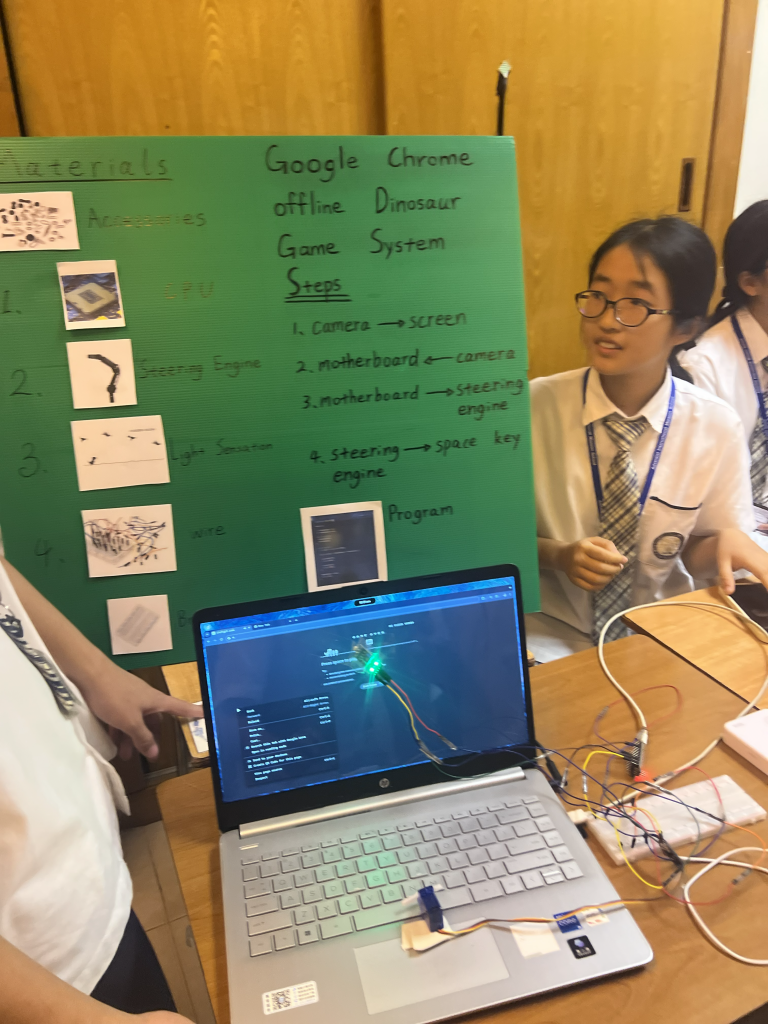
I tested whether a simple light sensor system could detect changes in environmental light and automatically control a servo motor to perform a mechanical action.
My hypothesis was that when the light intensity changes beyond a certain threshold, the system would reliably trigger the servo motor.
3–5 key things from the project
- Used a light-dependent resistor (LDR) to detect brightness changes
- Converted analog signals into readable data using Arduino
- Implemented threshold-based decision logic
- Controlled a servo motor using PWM signals
- Built a simple real-time responsive system
What difficulties did you encounter? How did you solve them?
One difficulty was that the sensor readings were unstable due to noise and small fluctuations in light.
I solved this by adding a threshold range and filtering the data in code.
Another problem was that the servo motor sometimes jittered.
I fixed this by stabilizing the input values and adjusting the control logic.
What was the result? What did you discover?
The system successfully detected changes in light and triggered the servo motor in real time.
I discovered that even a simple sensor and microcontroller setup can create a responsive system. However, the accuracy depends heavily on calibration and environmental conditions.
Three things you learned
- How to read analog sensor data using Arduino
- How to control a servo motor using PWM
- How to design a basic input–process–output system
Two questions I still have
- How can I make the system more stable in different lighting environments?
- How can I replace the simple sensor with a camera or AI-based detection?
One thing that was interesting/surprising
It was surprising how sensitive the sensor was — even small light changes could affect the system significantly.
Future improvements
I would improve the project by adding better filtering or smoothing algorithms to reduce noise.
I would also upgrade the system to use a camera instead of a simple light sensor, allowing more advanced detection and smarter control.